


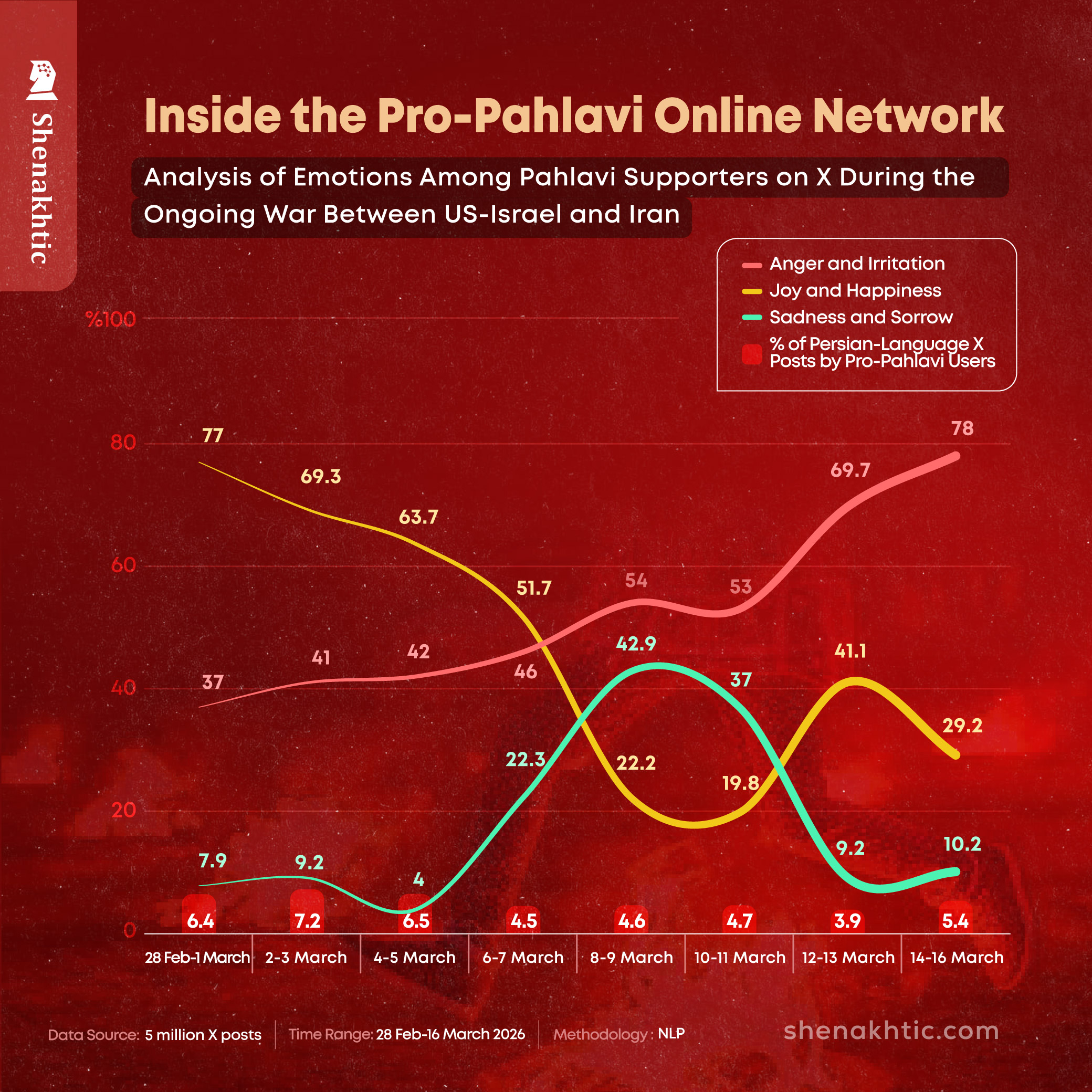


Analysis of large-scale data from X shows significant emotional shifts within the online network of supporters of Reza Pahlavi during the ongoing war between US-Israel and Iran.
At the start of the war, posts within this network displayed the highest level of joyful sentiment (77%), coinciding with the launch of US-Israeli attacks and the assassination of Iran’s leader.
Following the selection of a new national leader, emotional patterns shifted: distress rose to 42.9% and anger reached 54% within the network.
Over time, anger continued to intensify as many accounts within this network expressed support for expanded military actions against Iran, shared information about potential targets for bombardment inside the country, and normalized violence against Iranian people—despite the mounting human toll of the conflict: civilians killed, families torn apart, and communities forced to endure the destruction of their homes and daily lives.
As Chaharshanbe Suri (March 18) approaches—following calls by Reza Pahlavi for his supporters in Iran to take to the streets—anger within the network has reached its peak at 78%.
Data Sources and Methodology
The dataset analyzed in this study consists of 5 million Persian-language posts collected from X between February 28 and March 16, 2026. Because international internet access within Iran has been significantly restricted since the start of the war (February 28), posts on X during wartime are more likely to reflect the perspectives of the Iranian diaspora, who have unrestricted access to X.
In this study, “Pahlavi supporters” refers to users who employ widely recognized pro-Pahlavi hashtags and are embedded in a dense communication network connected to Reza Pahlavi, the exiled crown prince of Iran living outside the country since the Iranian Revolution.